
Why Your Emails Might Not Be Getting Delivered (And You’d Never Know)
Jan 21, 2026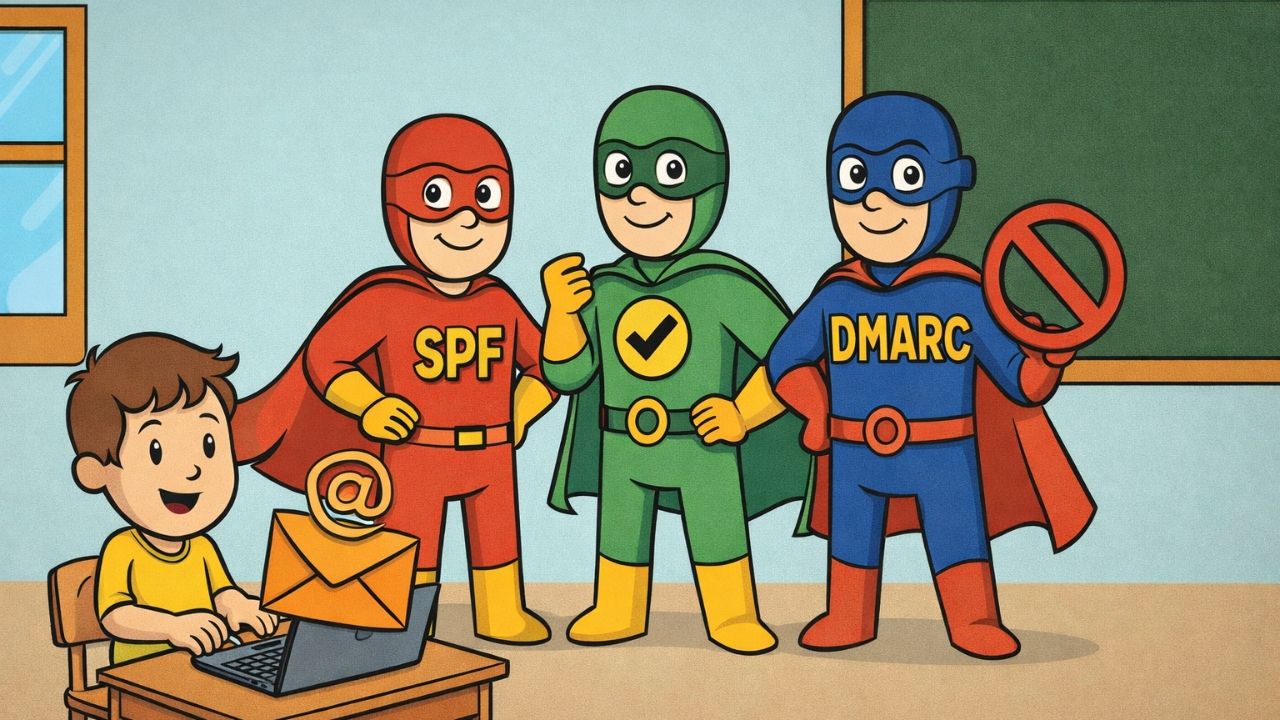
Why Your Emails Might Not Be Getting Delivered (And You’d Never Know)
Most ABA founders don’t think about email until something breaks.
Messages stop reaching staff.
Billing emails land in spam.
A payer says, “We never got that.”
Parents miss updates, reminders, or time-sensitive messages.
Or worse… someone impersonates your domain.
At that point, email stops feeling like a tool and starts feeling like risk.
In our Google Workspace vs Microsoft 365 breakdown, we talked about email as an identity layer, not just a communication tool.
This article goes one layer deeper, into the quiet systems that decide:
- whether your emails are trusted
- whether they’re delivered
- and whether your domain can be abused without you knowing
Those systems are called SPF, DKIM, and DMARC.
They sound technical.
They don’t need to be scary.
And you don’t need to be an IT expert to understand what they do or why they matter.
Why Email Deliverability Is a Leadership Issue (Not a Tech One)
Email isn’t just how you communicate.
It’s how:
- payers verify identity
- staff trust instructions
- systems reset passwords
- vendors validate ownership
When email fails, the problem usually isn’t sending.
It’s trust.
SPF, DKIM, and DMARC are how the internet decides whether messages claiming to be “from you” actually deserve to be believed.
Think of them as identity proof, not email features.
SPF: “Who’s Allowed to Send on Our Behalf?”
SPF (Sender Policy Framework) answers one simple question:
Which systems are allowed to send email as this domain?
In plain English:
SPF is a guest list for your email domain.
It tells the internet:
“Only these approved senders are allowed to send mail that looks like it came from us.”
Why SPF Matters
Without SPF:
- Anyone can impersonate your domain
- Spoofed emails look legitimate
- Your real emails lose trust over time
With SPF:
- Mail servers can verify legitimacy
- Unauthorized senders get flagged
- Deliverability improves
Common SPF Problems We See in ABA Orgs
- SPF never updated after switching email platforms
- Billing platforms added but not authorized
- Marketing tools sending without approval
- Multiple vendors stacking conflicting records
None of these are malicious.
They’re normal growth issues, but they quietly weaken trust.
DKIM: “Did This Message Change After It Was Sent?”
DKIM (DomainKeys Identified Mail) verifies message integrity.
It answers this question:
Was this email altered after it left the sender?
DKIM uses a digital signature, like a tamper seal.
Why DKIM Matters
DKIM ensures:
- Messages weren’t modified in transit
- Attachments weren’t altered
- Headers weren’t manipulated
Without DKIM:
- Messages are easier to spoof
- Trust scores drop
- Spam filtering becomes aggressive
With DKIM:
- Email content is cryptographically verified
- Receiving servers can trust the message
- Your domain reputation strengthens over time
A Simple Mental Model
SPF checks who sent the email
DKIM checks whether it stayed intact
You need both.
DMARC: “What Should Happen If Something Looks Wrong?”
DMARC (Domain-based Message Authentication, Reporting & Conformance) is the decision-maker.
It answers:
If an email fails SPF or DKIM checks… what do we do about it?
DMARC lets you tell the internet whether to:
- do nothing
- quarantine suspicious messages
- reject them outright
It also provides reports showing who’s trying to send as you legitimately or not.
Why DMARC Is the Most Important (and Most Ignored)
Without DMARC:
- Failures are invisible
- Spoofing can go unnoticed
- You don’t know who’s abusing your domain
With DMARC:
- You gain visibility
- You control enforcement
- You can stop impersonation before it spreads
DMARC Is About Control, Not Punishment
Many founders worry DMARC will “break email.”
Done recklessly, it can.
Done intentionally, it protects your identity without disruption.
DMARC is not a switch you flip.
It’s a posture you mature into.
How These Three Work Together
{insert image}
- SPF = “Only these friends can send letters”
- DKIM = “This letter really came from you”
- DMARC = “If something looks fishy, throw it out”
Individually, each helps.
Together, they create a strong email trust infrastructure.
This is why deliverability, security, and compliance overlap here, especially in healthcare.
Why This Matters More in ABA Than Most Industries
ABA organizations deal with:
- PHI
- payer communication
- audit scrutiny
- staff turnover
- remote access
That combination increases risk… not because of bad intent, but because identity confusion is easy to exploit.
Email misconfiguration doesn’t usually fail loudly.
It fails quietly:
- messages delayed
- trust eroded
- impersonation unnoticed
By the time it becomes visible, damage is already done.
“How Do I Fix This?” (Conceptually, Not Technically)
You don’t need to know how to write DNS records to understand the decision.
At a conceptual level, fixing SPF, DKIM, and DMARC means:
- Knowing who is allowed to send email as your domain
- Ensuring those senders authenticate properly
- Deciding how strict you want enforcement to be
- Monitoring reports instead of assuming it’s fine
The exact steps vary depending on:
- your domain registrar
- your email platform
- your third-party tools
The principles do not.
This Isn’t About Becoming Technical, It’s About Ownership
Most founders assume email “just works.”
Until it doesn’t.
SPF, DKIM, and DMARC are not advanced security features.
They are baseline ownership controls for your digital identity.
If you don’t know whether they exist, or who configured them, you’re borrowing trust, not owning it.
If You Want Help (Without Guessing)
If this article made you think:
“I’m not sure who controls this or if it’s even set up correctly.”
That’s normal.
And it’s fixable.
We help ABA organizations:
- review email identity configuration
- improve deliverability
- reduce impersonation risk
- document ownership and control
No fear tactics.
No jargon overload.
Just clarity.
If you want a second set of eyes, reach out or start with an email assessment and we’ll tell you exactly where you stand.
Because when email is your identity layer,
trust isn’t optional. It’s infrastructure.
Schedule your email assessment here: https://meetings.hubspot.com/joshnelson/email-health-check
Click here to join the eBCBA™ Odyssey and reclaim your role as the visionary leader you’re meant to be.
Stay connected with news and updates!
Join our mailing list to receive the latest news and updates from our team.
Don't worry, your information will not be shared.
We hate SPAM. We will never sell your information, for any reason.